The Century's Disaster Through Volunteer Eyes
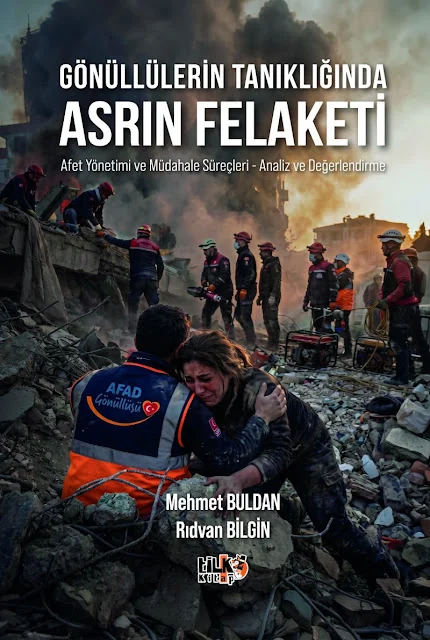
A Scientific Approach to Disaster Management, Field Operations, and the Volunteer Ecosystem.
On this page
A Scientific Approach to Disaster Management, Field Operations, and the Volunteer Ecosystem.
Tags: DRR Research, INSARAG Standards, Digital Transformation
The February 6, 2023 earthquakes in Kahramanmaraş weren't just a catastrophic seismic event; they marked a critical turning point for global Disaster Risk Reduction (DRR) and Disaster Risk Management (DRM) protocols. In our recently published book, "Gönüllülerin Tanıklığında Asrın Felaketi" (The Disaster of the Century Through the Eyes of Volunteers), we present a comprehensive framework that bridges the gap between state-led institutional response and spontaneous human solidarity.
For international experts, this study offers a rare, data-driven look into the mechanics of managing a multi-province disaster affecting over 14 million people. By analyzing the experiences of 1,175 volunteers, we move beyond anecdotal evidence to provide a rigorous evaluation of the "Integrated Disaster Management" model.
1,175
Volunteers Analyzed
12
National Systems Compared
1:15
DRR Investment ROI
3.5M
Evacuees Tracked
Global Benchmarking: 12 Systems, One Goal
A core contribution of this work is the comparative study of 12 international disaster management frameworks. We examine how the Sendai Framework is operationalized across diverse socio-political landscapes, from the highly decentralized German THW model to the tech-integrated Japanese JBS.
| Country / System | Strategic Approach | Critical Asset |
|---|---|---|
| Japan (BOSAI) | Culture-Integrated Prevention | Hyper-Local Resilience Centers |
| Germany (Federal) | Technical Decentralization | 97% Volunteer-Based Specialized Corps |
| USA (FEMA/NIMS) | Modular Scalability | Incident Command System (ICS) Standards |
| Türkiye (AFAD) | Centralized Institutional Agility | Rapid National Mobilization Networks |
Institutional Evolution: TAMP, TARAP, & TASİP
The book detail’s Türkiye's paradigm shift from "reactive crisis management" to "proactive risk governance." For global practitioners, understanding the interplay between these three pillars is essential for regional cooperation:
TARAP: The Risk Reduction Framework
Focusing on pre-disaster vulnerabilities, TARAP represents the institutionalization of risk assessments, ensuring every sector—from infrastructure to education—is aligned with long-term resilience goals.
TAMP: Operational Response Standard
The TAMP protocol defines the 25 service groups that drive the disaster response engine. It provides the "who, what, and when" during the chaotic first 72 hours of a catastrophic event.
Field Data: The Volunteer Voice
Utilizing Python-driven data analysis, the book translates the subjective experiences of 1,175 responders into objective metrics. We analyzed logistics, communication bottlenecks, and the psychosocial impact on first responders.
No comments yet. Be the first.